Popular Stud™ Dimensions
L x W x H cm
45 x 45 x 45
60 x 60 x 67
(Made to order in our guide dimensions or your requested dimensions)

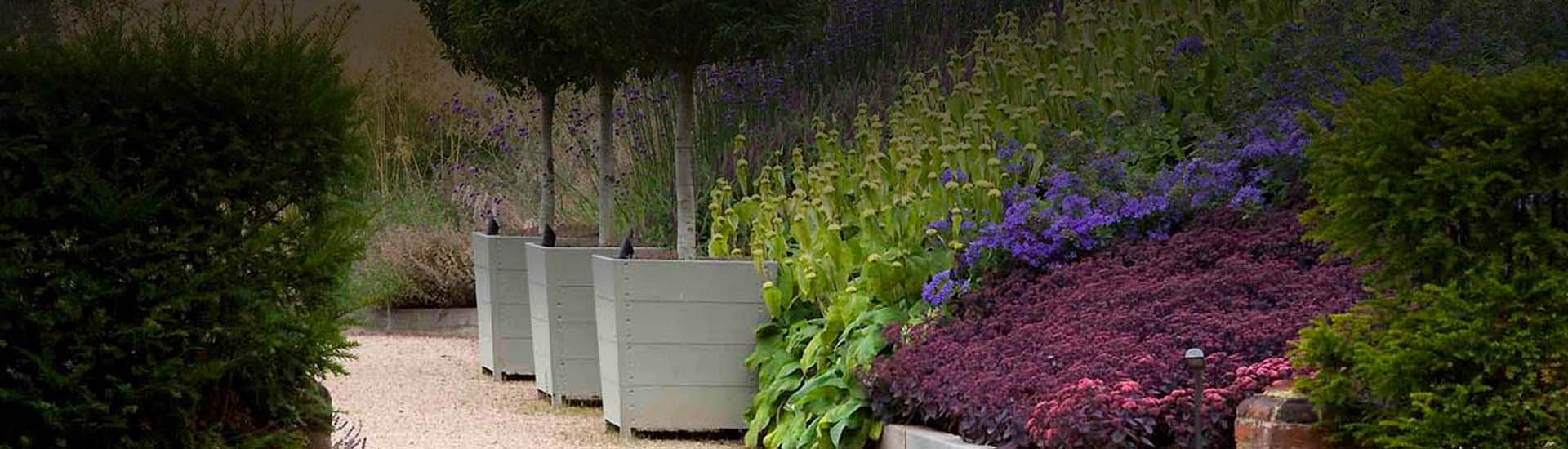
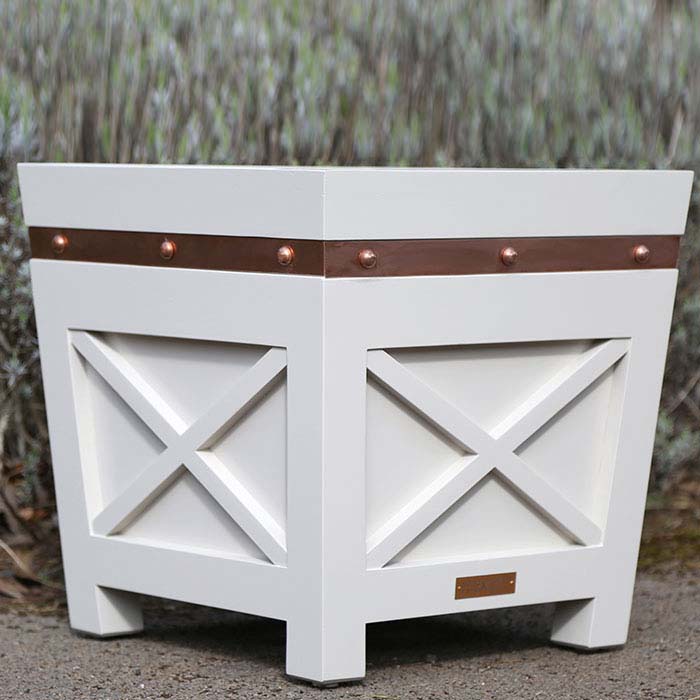
Popular Stud™ Dimensions
L x W x H cm
45 x 45 x 45
60 x 60 x 67
(Made to order in our guide dimensions or your requested dimensions)
The Stud™ is defined by bold cross-braced timber panels and contrasting copper detailing, giving it a strong architectural character.
Diagonal timberwork creates the distinctive cross pattern across each elevation, while a copper band and visible stud detailing introduce warmth and contrast around the upper section of the planter.
The combination gives the Stud™ a character quite different from our more restrained panelled designs, making it particularly effective where the planter itself forms part of the architecture of a garden or landscape.
We make the Stud™ exclusively in Accoya™, with its proportions and painted finish considered in relation to the planting and setting.
The cross-braced detailing continues around the Stud™, creating a strong geometric rhythm when viewed from different directions.
Copper detailing defines the upper profile and provides a warm contrast against the painted timber, while the substantial proportions give the Stud™ presence alongside specimen trees and larger planting.
Behind the decorative detailing, we engineer each Stud™ individually according to its dimensions and anticipated planting load, providing the strength required for substantial planting and long-term exterior use.
Each Stud™ is made to order exclusively in Accoya™, with dimensions and painted finish considered in relation to the planting and architectural setting.
Commission individually, as a matching pair or as part of a coordinated arrangement for a larger landscape.
Current lead time: approximately 7–9 weeks.
Explore the Stud™ in a range of garden and architectural settings, showing its distinctive cross-braced detailing across different proportions, painted finishes and planting schemes.
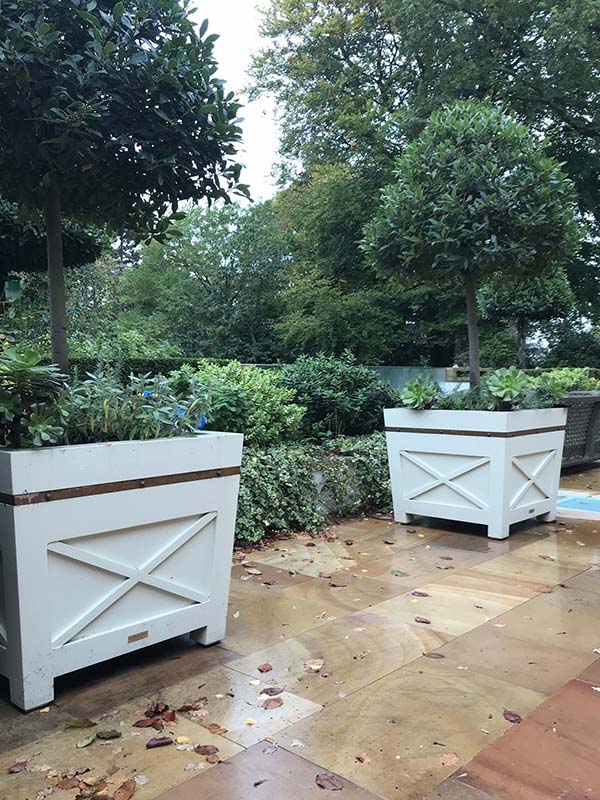
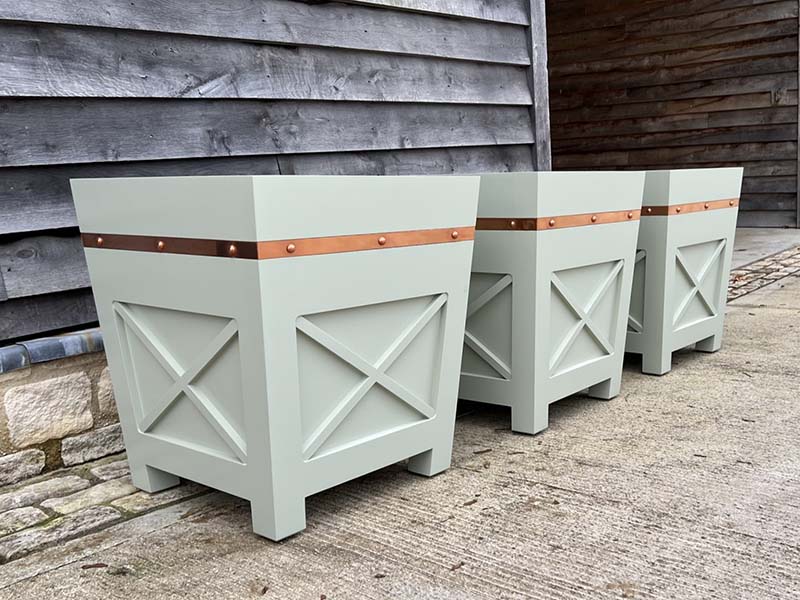
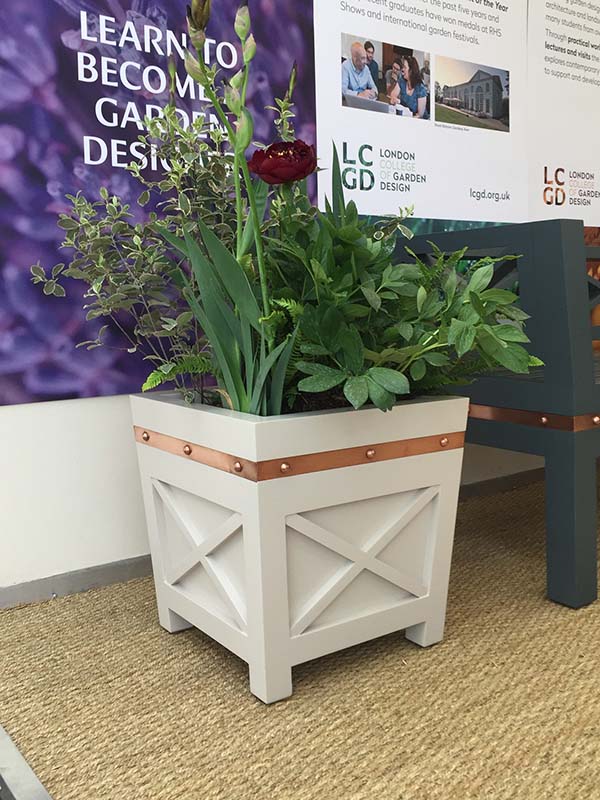
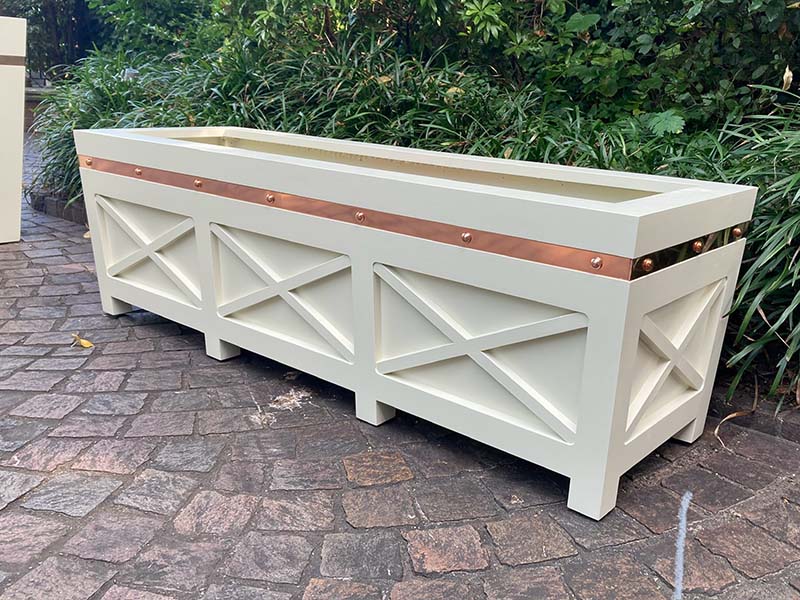
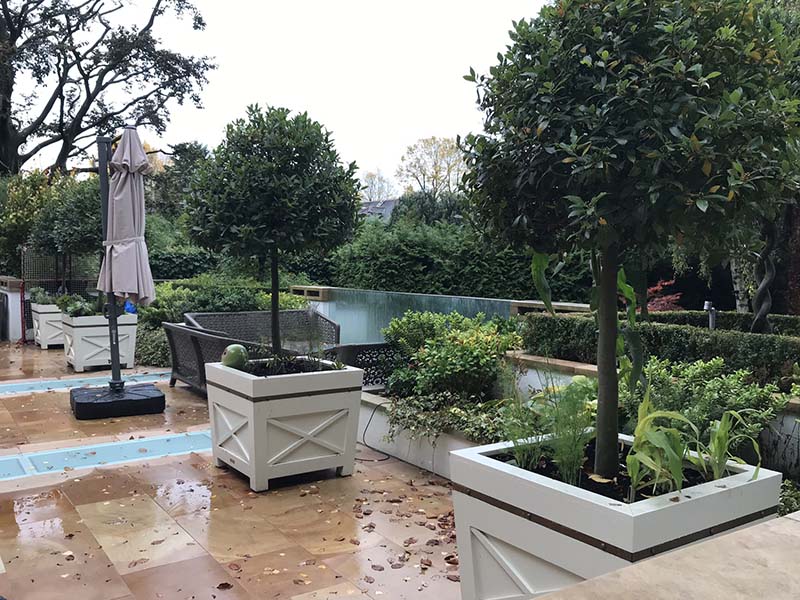
The distinctive cross-braced design of the Stud™ works particularly well in long proportions, while retaining the character and balance of the original design.
Long Stud™ planters are particularly suited to terraces, boundaries and larger planting schemes, where the repeated cross-braced panels create a strong architectural rhythm.
Different proportions can also be commissioned together where the design needs to continue across a wider garden or landscape.
We make the Stud™ exclusively in Accoya™, chosen for its exceptional dimensional stability and suitability for the precise cross-braced detailing that defines the design.
Its stability also provides an excellent surface for a professionally applied painted finish, allowing colour to emphasise the relationship between the timber detailing, metal band and visible studs.
The Stud™ is defined by its bold cross-braced timber panels and contrasting copper detailing. A copper band and visible stud detailing around the upper section give the planter its distinctive architectural character.
Yes. The cross-braced design works particularly well in long proportions, where the repeated panels create a strong architectural rhythm across terraces, boundaries and larger planting schemes.
We make the Stud™ exclusively in Accoya™, chosen for its exceptional dimensional stability and suitability for the precise detailing and professionally applied painted finish.
Yes. We make each Stud™ to order, considering its dimensions and proportions in relation to the intended planting and architectural setting.
Yes. We engineer each Stud™ according to its dimensions and anticipated planting load, providing the strength required for specimen trees and substantial planting.
Yes. We design the Stud™ for direct planting. Our specialist internal coating system, developed for our planters in 2008, protects the internal timber surfaces while maximising the space available for planting.
Explore our wooden trough planters, designed for terraces, boundaries, entrances and larger landscape schemes.