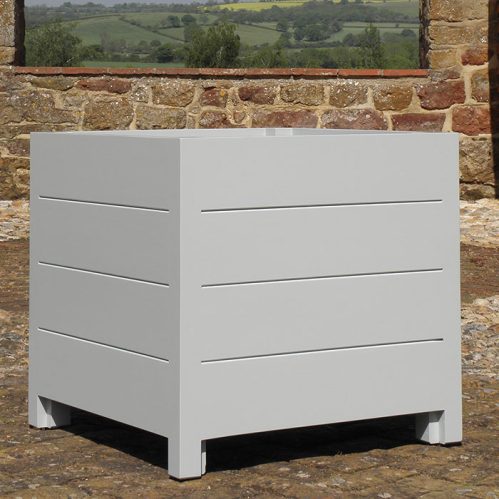
A streamlined square planter with crisp horizontal detailing and carefully balanced proportions.

Keble No.3 Classic™ Modern Square Planter
Made in Oak, Iroko or Accoya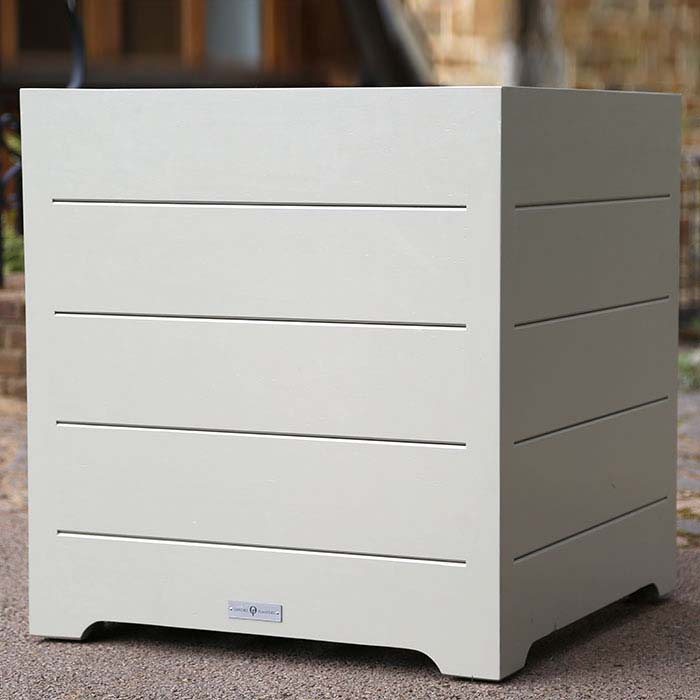
Popular Keble No.3 Classic™ Dimensions
L x W x H cm
42 x 42 x 42
60 x 60 x 56
66 x 66 x 70
(Made to order in our guide dimensions or your requested dimensions)
A Contemporary Architectural Wooden Planter
The Keble No.3 Classic™ is a contemporary wooden planter defined by straight-sided proportions, horizontal boarding and restrained architectural detailing.
Developed as a more streamlined interpretation of the Keble No.3™, the Classic removes unnecessary ornament to create a crisp geometric form particularly suited to contemporary gardens and architectural landscapes.
Horizontal timber boards give the planter its distinctive character, while the subtly shaped lower edge introduces a considered detail without interrupting the simplicity of the design.
We make each Keble No.3 Classic™ individually to order in our Cotswolds workshop in Oak, Iroko or Accoya™, with dimensions and finish considered in relation to its setting.
Clean Lines & Considered Detail
Strong geometry gives the Keble No.3 Classic™ its architectural presence.
Straight sides and horizontal boarding create a restrained silhouette, while the shaped lower edge provides a subtle point of difference from a purely minimalist planter.
As a result, the Keble No.3 Classic™ can introduce structure and definition without competing with the planting or surrounding architecture.
Commission a Keble No.3 Classic™ Planter
Dimensions and finish can be considered specifically for the intended planting, setting and architectural context.
Commission the Keble No.3 Classic™ individually, as a matching pair or as a coordinated collection for entrances, terraces and larger landscape schemes.
Tell us about your project and we will be happy to advise on the most appropriate proportions and finish.
Current lead time: approximately 5–7 weeks.
Keble No.3 Classic™ Gallery
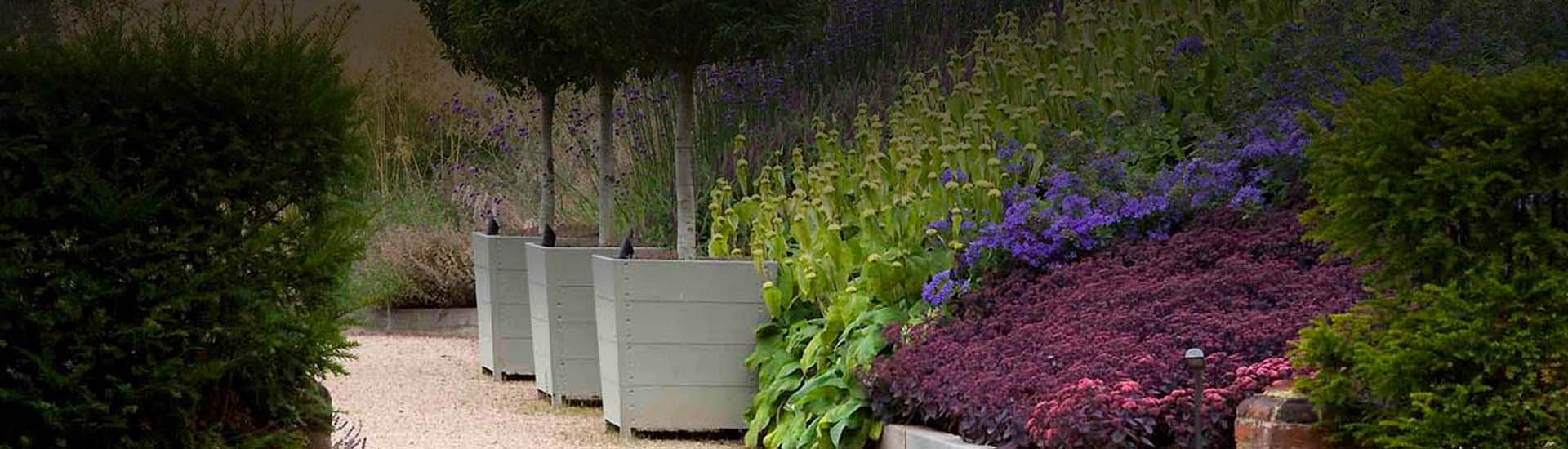
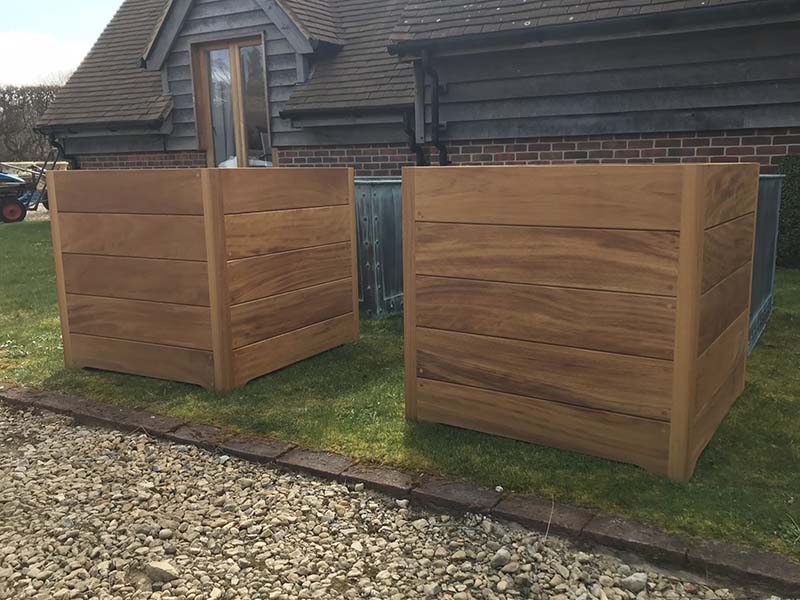
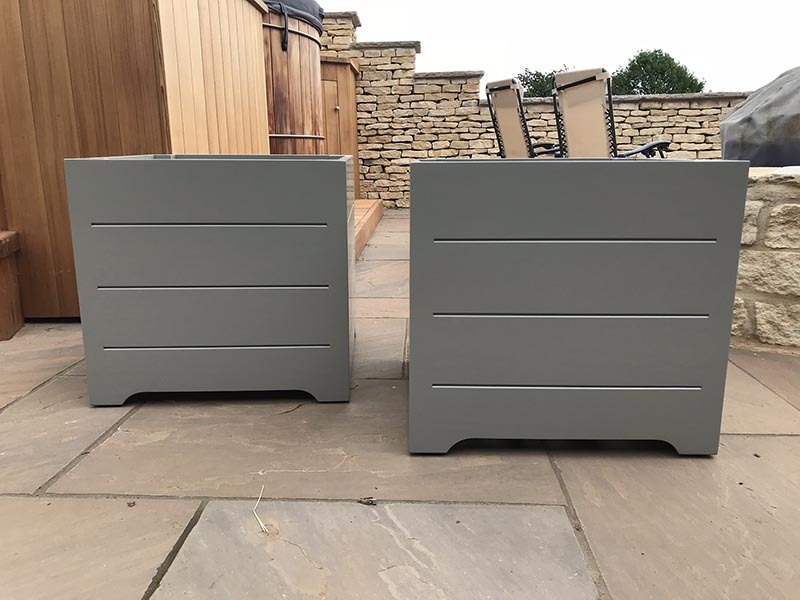
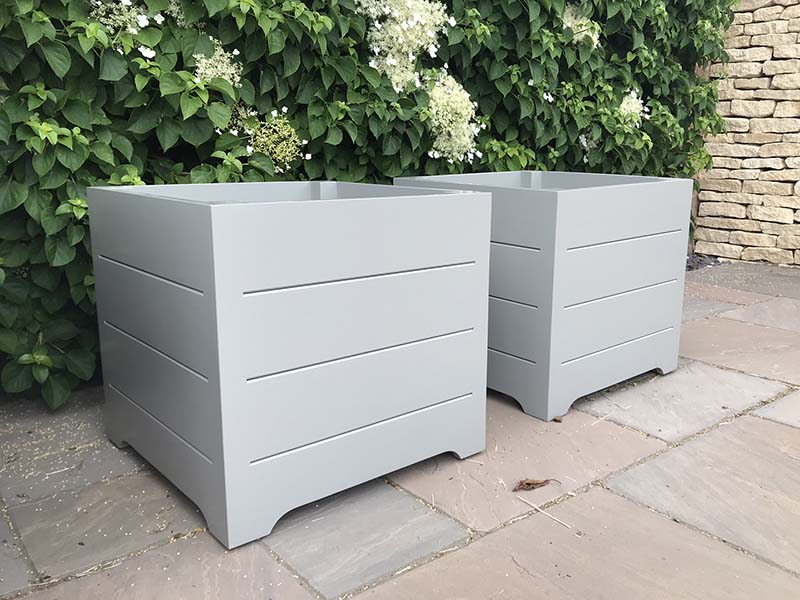
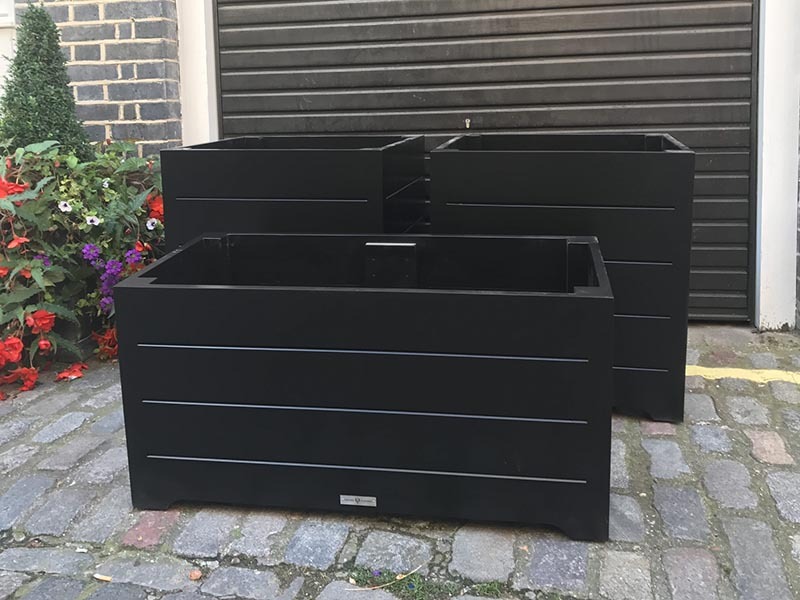
Explore Keble No.3 Classic™ planters in natural timber and painted finishes across contemporary and traditional garden settings.

Designed for Contemporary Gardens
The clean geometry of the Keble No.3 Classic™ makes it particularly suited to contemporary gardens, terraces and architectural landscapes.
Its strong proportions provide a considered framework for specimen planting, while the understated horizontal detailing sits naturally alongside modern glazing, rendered façades, stone, brick and contemporary landscape materials.
Within larger schemes, repeated Keble No.3 Classic™ planters can introduce rhythm, structure and definition without competing with the surrounding architecture or planting.
Bespoke Dimensions
As with all Oxford Planters designs, the Keble No.3 Classic™ is made to order rather than restricted to fixed sizes. We consider its proportions in relation to the planting, setting and scale of the surrounding architecture.
Oak, Iroko or Accoya™
The Keble No.3 Classic™ can be commissioned in Oak, Iroko or Accoya™, with each timber bringing a different character to its clean horizontal detailing.
Oak and Iroko may be left to weather naturally, emphasising the grain and warmth of the timber against the planter’s contemporary form. Accoya™ provides the option of a painted finish, allowing the Keble No.3 Classic™ to relate more closely to surrounding architecture and exterior joinery.
Keble No.3 Classic™ FAQs
What is the difference between the Keble No.3™ and Keble No.3 Classic™?
Both share the distinctive horizontal-boarded character of the Keble collection. The Keble No.3 Classic™ offers a more streamlined interpretation, with straight sides and restrained detailing giving it a cleaner contemporary character.
Is the Keble No.3 Classic™ suitable for contemporary gardens?
Yes. Its strong geometry and understated detailing make it particularly suited to contemporary gardens, terraces, courtyards and architectural landscapes.
What timber is the Keble No.3 Classic™ available in?
The Keble No.3 Classic™ can be commissioned in Oak, Iroko or Accoya™. Oak and Iroko may be left to weather naturally, while Accoya™ is particularly suited to a painted finish.
Can I plant directly into a Keble No.3 Classic™?
Yes. We design the Keble No.3 Classic™ for direct planting. Our specialist internal coating system, developed for our planters in 2008, protects the internal timber surfaces while allowing the full internal space to be used for planting.
Can the Keble No.3 Classic™ be made to different dimensions?
Yes. We make every Keble No.3 Classic™ to order, with guide dimensions providing a starting point. We can adjust the proportions according to the intended planting and setting.
Explore the Original Keble No.3™ Cube Planter
Discover the original Keble No.3™, with its more pronounced architectural detailing and distinctive interpretation of the Keble horizontal-boarded design.